
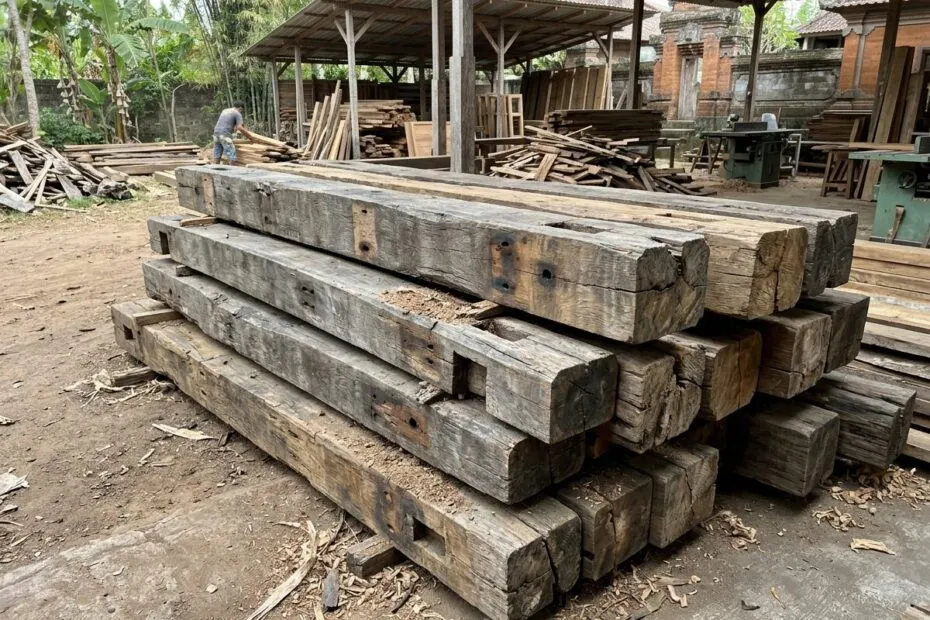
Reclaimed teak is timber that has already lived one life. In Indonesia it typically comes out of old houses, warehouses and other structures, and out of old furniture, when they are taken down or rebuilt. It is cleaned, de-nailed, re-sawn and dried again, then made into new pieces.
Buyers want it for three reasons: the timber has had decades to settle, it carries visible character, and it has a story. The drawbacks are real too. Nail holes, old joints, uneven colour and a limited supply all affect what you get and what you pay.
We make furniture in reclaimed timber alongside teak, mahogany and suar. This guide explains where reclaimed teak comes from, how it is processed and graded, and how to tell the real thing from new teak that has been made to look old.
Where reclaimed teak comes from
Teak has been used for building across Java and the wider archipelago for a long time. It was valued for posts, beams, floorboards, doors and wall panels because it resists rot and insects better than most local timbers. When those buildings come down, the teak is often still sound.
The usual sources are:
- Old houses. Posts, beams, rafters, floorboards and carved panels from traditional and colonial-era homes.
- Warehouses and commercial buildings. Long structural beams and heavy planks.
- Old furniture and fittings. Doors, frames, cabinets and tables broken down for their timber.
Supply depends on what is being demolished, so it is never steady. A particular size, colour or volume may be available one month and not the next.
Why buyers choose it
Settled timber. Reclaimed teak has spent years, often decades, drying in service. Well-processed reclaimed timber tends to be stable, though it still needs proper drying before it is made into furniture (more on that below).
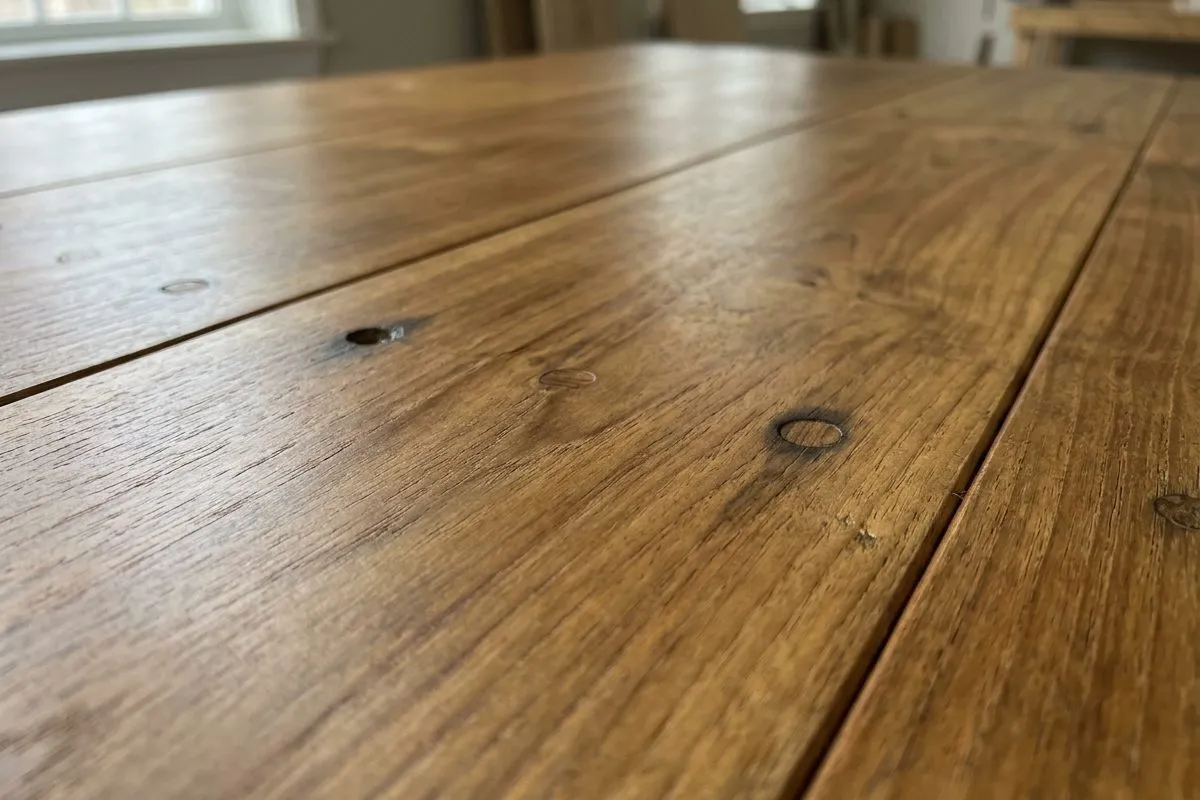
Character. Nail holes, saw marks, old mortises and a weathered patina give each piece a surface that new timber cannot reproduce honestly.
A story. For hotels, restaurants and villas, reclaimed timber gives a piece a history that guests notice. For private buyers, it is often simply the look they want.
Reuse. Using timber that already exists is an easy argument to make. It does not remove the need for paperwork, which we cover below.
The honest drawbacks
Reclaimed teak is not for every buyer or every piece. Know these before you order.
- Nail holes and old fixings. They can be filled, left open or made a feature, but they will be there.
- Old joints and cuts. Mortises, notches and bolt holes from the timber’s first use show up in unexpected places.
- Colour variation. Boards from different buildings, and different faces of the same beam, can vary a lot in tone. A large table will rarely be one even colour.
- Cracks and checks. Old beams often carry surface checks and end splits. Some are stabilised and kept, some are cut away.
- Availability. Matching a long run of pieces, such as 40 identical chairs for a hotel, is harder than with new timber, because the supply comes in batches.
- Processing cost. Every board must be de-nailed, checked for metal, cleaned and re-sawn. Waste is higher than with new sawn timber. That labour and waste show up in the price.
How reclaimed teak is processed
Good processing is what turns old building timber into furniture timber. The general stages are:
- Sorting. Timber is sorted by size, condition and species. Not everything sold as old teak is teak, so species checks matter here.
- De-nailing. Every visible nail, screw and bolt is removed.
- Metal detecting. Broken-off nails and hidden fixings are found before the timber goes near a saw. A hidden nail can wreck a blade and spoil a board.
- Cleaning. Dirt, old paint and loose surface material come off.
- Re-sawing. Beams and planks are cut to working sizes. This is where the fresh timber inside is first seen, and where some boards turn out to have rot or insect damage that was not visible from outside.
- Drying. Old timber is not automatically dry. It can take on moisture in storage, especially in a tropical climate. It should be dried and checked with a moisture meter before production.
- Grading. Boards are sorted by defects and appearance for different uses.
Grading language you will hear
There is no single international grading standard for reclaimed teak. Each supplier uses its own terms, so ask what each one means.
Terms buyers commonly hear include:
- Clean, select or premium. Few visible nail holes or defects. Closest in look to new teak, with an aged colour.
- Character or rustic. Nail holes, old joints, checks and colour variation are kept as part of the look.
- Mixed or standard. A blend of both, sorted less strictly.
You may also hear the A, B and C grades used for new teak, which describe the proportion of heartwood and the evenness of colour. Our guide to real teak and fake teak explains those. On reclaimed timber the same letters are sometimes used loosely, so ask for photos of the actual boards.
Genuine reclaimed or distressed new teak
New teak can be made to look old with chains, wire brushes, stains and tools. That is a legitimate finish if it is described honestly. It is a problem when it is sold as reclaimed.
Signs of genuine reclaimed timber:
- Old fixings that make sense. Nail holes in lines where boards were once fixed to joists. Mortises and notches that have nothing to do with the new piece.
- Iron staining. Dark marks around old nail holes where iron fixings have reacted with the wood over years.
- Colour that changes with depth. A weathered outer surface, with fresher, warmer timber visible where it has been cut or planed.
- Irregular wear. Wear where feet, hands or weather actually reached, not spread evenly across every surface.
Signs of distressing:
- Dents and scratches in a repeated pattern, at the same depth, all over the piece.
- Wormholes that are perfectly round and straight, drilled rather than bored.
- An even “aged” colour that sits only on the surface, with the same tone on every board.
When in doubt, ask to see the underside, the inside of a carcase and the end grain. Distressing is usually applied to what shows.
Finishing reclaimed teak
Finish changes reclaimed timber more than new timber, because the surface varies so much. A natural oil keeps the texture and lets the colour variation show. A matte PU gives more protection on dining and bar tops. White wash softens strong colour differences. Our wood finishes guide compares these, and we send a physical sample on the actual timber before production so you can approve the look.
Paperwork for export
Reclaimed does not mean undocumented. Timber leaving Indonesia still needs legality documents, and many importing countries have their own timber legality rules, so check with your customs broker. Our guide to legal timber in Indonesia compares reclaimed and plantation teak and lists the documents to request.
Frequently asked questions
Is reclaimed teak more expensive than new teak?
It can be, because processing takes more labour and produces more waste, and supply is limited. It depends on the grade and the piece.
Is reclaimed teak stable enough for a dining table?
It can be, provided it has been properly re-sawn, dried and checked for moisture before production. Ask your maker how the timber is dried and what moisture level they work to.
Can I order a matching set in reclaimed teak?
Yes, but expect some colour and texture variation between pieces. For large matching runs, agree on the grade and approve a sample before production.
Do nail holes need filling?
That is a choice. Filled holes give a smoother surface that is easier to clean, which suits tabletops. Open holes keep more character and suit cabinets, shelves and doors.
See what we make
Our catalogue shows the pieces we make. We make to order in teak, mahogany, suar or reclaimed timber, in your size and finish. Send us the piece and the look you want on WhatsApp at +62 812-3842-178 and we will reply within 48 hours. For a sense of what drives price on a custom order, see what custom teak furniture costs in Bali.